How Jeremy Bentham Tried to Count the Human Soul
🎧 Listen to an Audiobook Sample
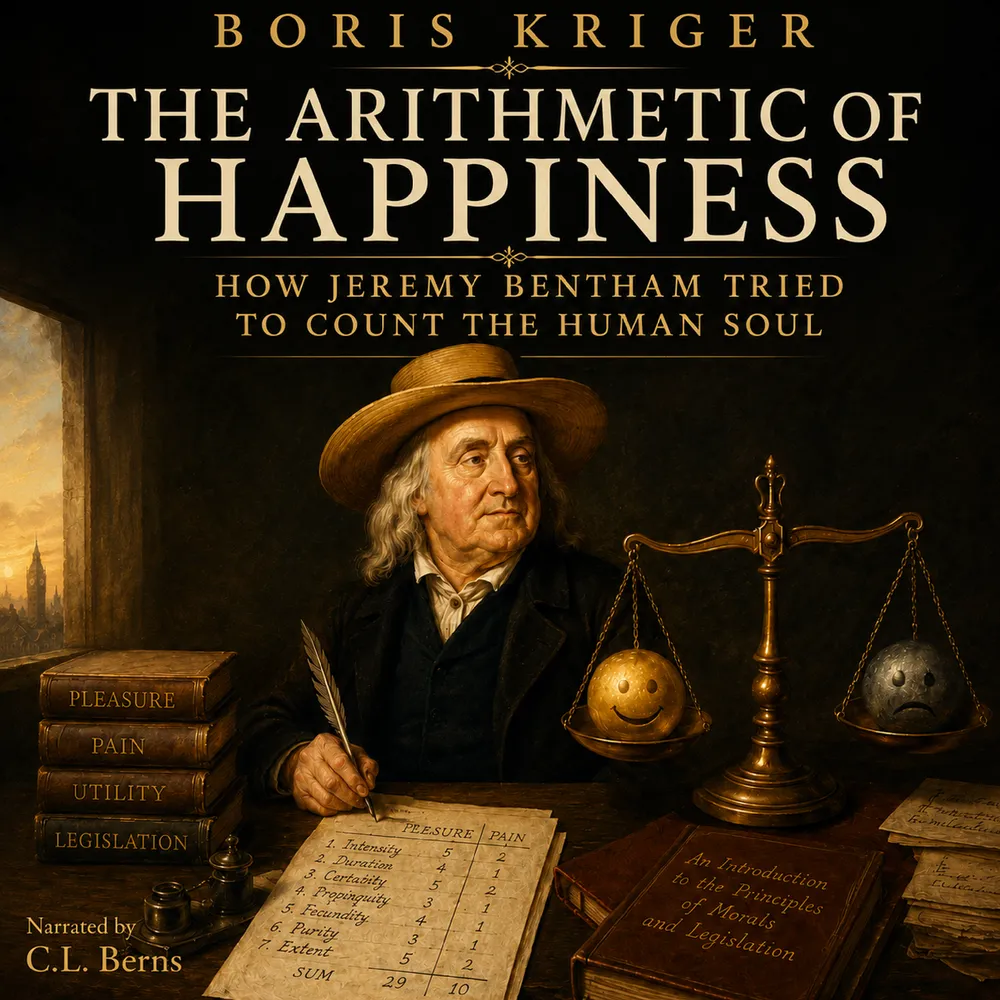
Two centuries before the spreadsheet, an English lawyer proposed that right and wrong could be settled by arithmetic. Add up the pleasure an action produces, subtract the pain, and the larger column wins. Jeremy Bentham called it the greatest happiness of the greatest number, and it remains the most audacious idea in the history of ethics: that the human soul might be counted. This book honors Bentham as a liberator who freed morality from authority and superstition, and then takes his calculus apart from the inside, using his own sharpest tool against him. The usual objection is that happiness cannot be measured. The deeper trouble, this book argues, is stranger. Grant Bentham a perfect instrument for weighing every joy and grief, and the sum he wants to maximize still refers to nothing, because no single mind ever feels the total. The greatest happiness is a happiness that belongs to no one. From the prison he designed to the metrics in your pocket, from the prejudices that crept into his formula to the question his arithmetic could never hold, this is the story of a brilliant, fiction-hating mind that swallowed the largest fiction of all, and of what is left of us once the counting stops. We seek happiness, yes, but we also seek truth, freedom, love, meaning, and dignity, and very often the most human choice is the one no calculus would ever recommend.
Written by Boris Kriger
Complimentary Audible review codes are currently available for this title in the US and UK. If you’d like a code in exchange for an honest review, please contact me for availability.